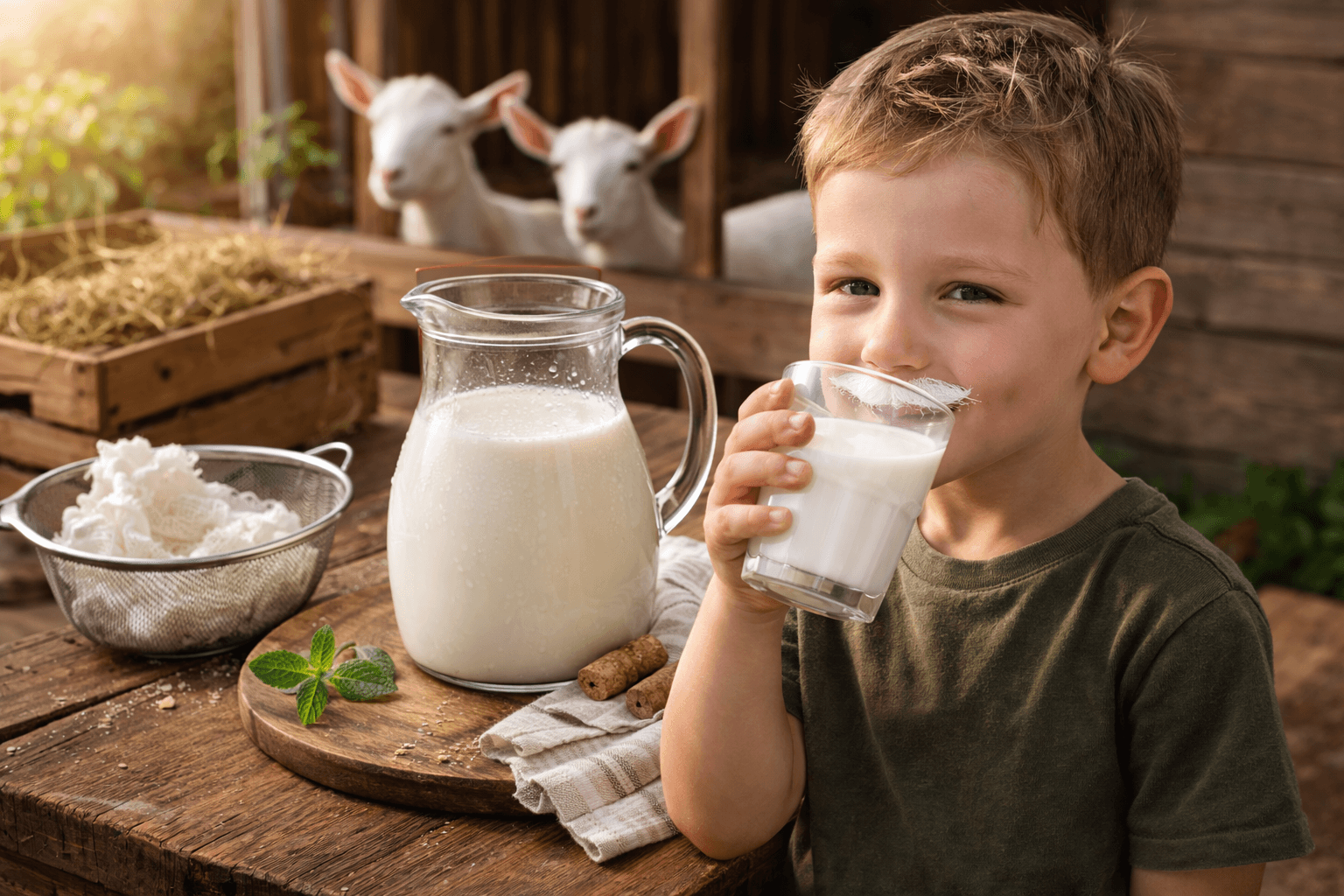
How Long Can Fresh Goat Milk Be Stored?
2026-02-28
Fresh goat milk straight from the farm is a valuable part of a healthy diet — but it loses freshness quickly. The faster it is chilled after milking, the longer it will stay safe and tasty. Three things matter above all: milking hygiene, clean containers, and low storage temperature.
Fresh Goat Milk – How Long Does It Last in the Fridge?
Raw, unpasteurized goat milk is best consumed as soon as possible — experts recommend within 24–48 hours after milking. At home, stored at a constant 2–4°C (36–39°F), properly cooled milk usually remains acceptable for about 2–3 days. Polish regulations require raw goat milk to undergo heat treatment within 72 hours of milking, which confirms that the safe maximum should not exceed three days.
A summary by milk type:
- Raw goat milk: consume ideally within 24–48 hours; maximum 3 days (72 hours) under ideal refrigeration.
- Pasteurized/boiled milk: heat treatment kills most microorganisms and extends shelf life to 5–7 days in the fridge.
- UHT (ultra-high temperature) milk: shelf-stable for months in a sealed package; consume within 2 days once opened.
Cleanliness and Temperature – The Basics of Storage
Temperature is critical. Bacteria multiply fastest between 4–40°C (39–104°F). Below 4°C growth slows significantly, though some pathogens — including Listeria monocytogenes — can still multiply at 0°C. This is why good hygiene always goes hand in hand with proper chilling.
Key storage rules:
- Cool immediately — get milk into the fridge (2–4°C) as quickly as possible after milking. Avoid frequent opening and temperature fluctuations.
- Use the right spot — the back of the bottom shelf, not the door. Fridge doors are warmer and experience more temperature swings, accelerating spoilage.
- Glass containers — glass does not absorb odors, is easy to sterilize, and opaque glass protects light-sensitive vitamins A and D from photodegradation. Plastic (especially HDPE) can transfer off-flavors and is harder to fully clean.
- Hygiene and labeling — wash and sterilize containers after each use. Always label milk with the collection or purchase date and rotate stock so older portions are used first.
Home Methods to Extend Shelf Life
Pasteurization
Home pasteurization is the simplest and most effective method. Two proven approaches:
- Low-temperature long-time (LTLT): heat milk to 63°C (145°F) and hold for 30 minutes, stirring constantly. Immediately cool in an ice-water bath to 4°C.
- High-temperature short-time (HTST): heat to 72°C (161°F) for 15 seconds, then cool immediately. Requires a precise thermometer and fast action.
Home-pasteurized milk can be stored in the fridge for 5–7 days. Cool it as quickly as possible after heating — slow cooling allows bacteria to multiply.
Freezing
In urgent cases, milk can be frozen at -18°C (-0°F). It remains suitable for consumption for about 3–4 months. A few rules to follow:
- Use freezer-safe containers; leave 1–2 cm of headspace for expansion.
- Thaw only in the refrigerator — never at room temperature.
- After thawing, fat separation, cloudiness, and reduced taste are normal physical effects, not signs of spoilage.
Dietitians generally recommend freezing processed milk products (yogurt, cottage cheese) instead — they retain more of their properties after thawing.
Practical Tips
- Buy only the amount you will use within 2–3 days — sensible stock rotation eliminates waste.
- Wash hands before handling milk and keep all milking equipment and bottles clean.
- When feeding raw milk to infants, young children, elderly people, or pregnant women, consider pasteurizing it first — these groups are more vulnerable to bacterial infections, including Listeria.
Signs of Spoiled Fresh Goat Milk
Fresh goat milk is liquid, white, and slightly creamy, with a characteristic but pleasant aroma. If you notice any of the following, do not consume the milk:
- Smell — sharp, sour, rotten, bitter, or any hint of mold or ammonia.
- Texture — protein clumps, slimy or stringy consistency, foam, or gas on the surface.
- Color — yellowish or pinkish sediment, a visible separated fat layer, or cloudiness.
When in doubt, trust your senses and the date. Even milk from a trusted supplier should not be consumed after the recommended period or if there are any concerning changes in smell, taste, or appearance.
Summary of Practical Rules
- Freshness and timing: consume fresh goat milk as soon as possible — ideally within 1–2 days of purchase (maximum 3 days).
- Cooling: always store milk in a cold place (2–4°C); after cooling, do not keep it in the fridge door.
- Clean containers: use clean, airtight glass bottles or jars; wash and sterilize after each use.
- Pasteurization: if milk cleanliness is uncertain, heat it to the appropriate temperature or boil — a simple way to extend shelf life.
- Freezing: goat milk can be frozen (up to 3–4 months), but note the negative impact on taste and consistency. Use refrigeration whenever possible.
- Signs of spoilage: always check milk taste and smell before drinking. Sour aroma, clumps, or color change indicate it is not safe.
By following these simple rules and using home storage methods (pasteurization, rapid cooling, clean containers), you can maximize the shelf life and safely enjoy the exceptional taste and health benefits of fresh goat milk.