5 Myths About Goat Milk
2026-02-11
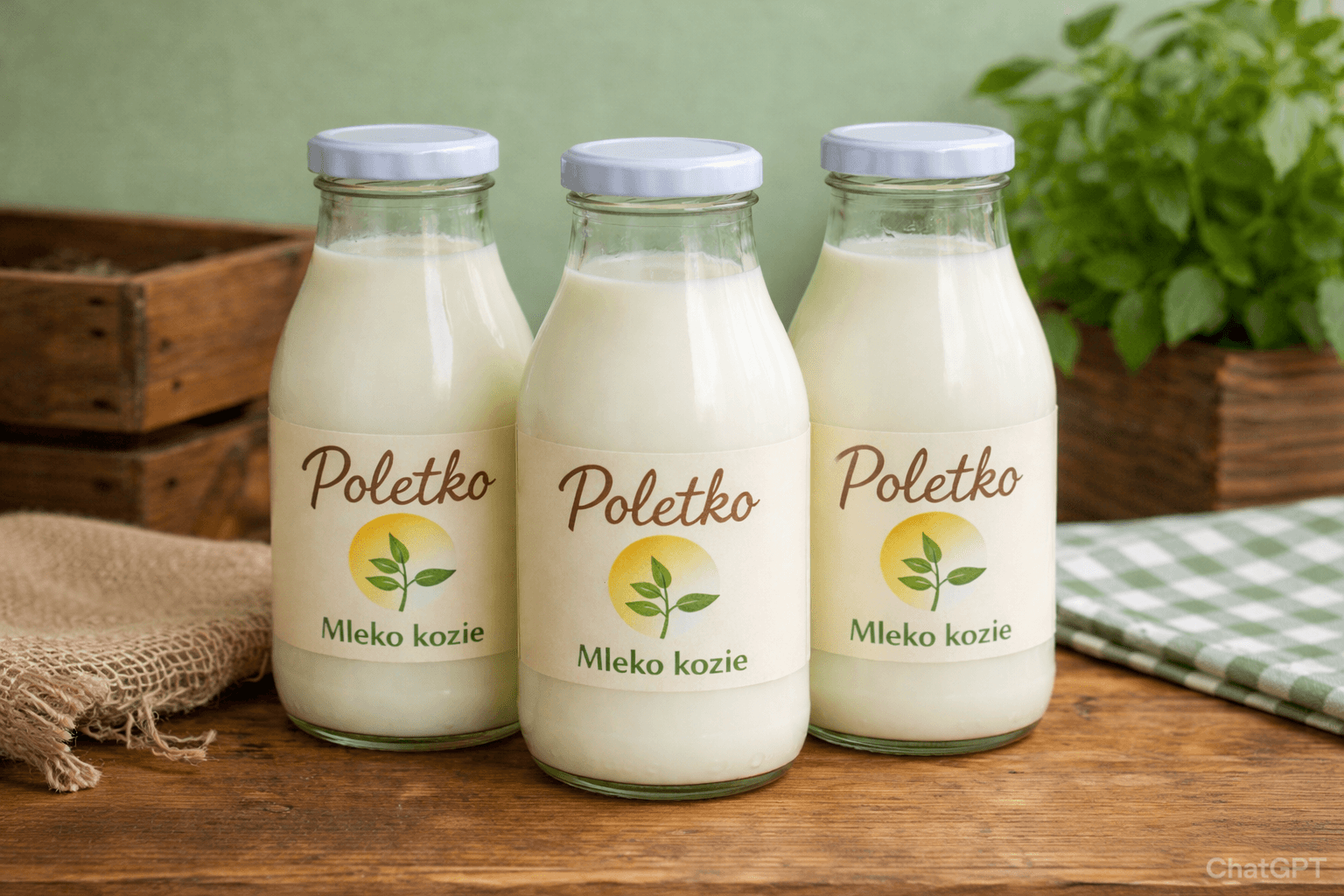
Goat milk has sparked strong emotions for years — some people gladly include it in their diet, while others approach it with hesitation. Stereotypes most often stem from experiences with industrially processed dairy, not fresh milk from a small farm. In fact, goat milk has a distinct nutritional profile: more calcium (approx. 134 mg vs. 119 mg per 100 ml), less lactose (approx. 4.2 g vs. 4.7 g), and fat in smaller globules — all of which directly affect its taste, smell, and digestibility.
Where Do the Myths About Goat Milk Come From?
For decades, cow's milk dominated the Polish market, while goat milk was treated more as a curiosity or a niche product. Many people have never had the opportunity to try fresh, unpasteurized milk from a small farm — they only know the long-stored and heavily processed version.
In reality, the taste and aroma of goat milk depend primarily on:
- freshness and storage — the time from milking to consumption and how efficiently the cold chain is maintained,
- diet and farming conditions — what the goats eat, their health, and living conditions,
- milking hygiene — cleanliness of equipment and sanitary standards on the farm.
MYTH 1: "Goat Milk Smells Bad"
This stereotype results from improper handling, not from the nature of the milk itself. The characteristic aroma of goat milk is caused by medium-chain fatty acids — caproic (C6), caprylic (C8), and capric (C10) acids. Their Latin names come directly from the word capra (goat). In fresh, properly chilled milk from well-kept goats, these compounds are barely perceptible. An unpleasant smell only develops when milk is not cooled quickly after milking or when hygiene is neglected.
The smell of goat milk may intensify due to mistakes such as:
- insufficient cleaning of the udder or milking equipment,
- lack of rapid cooling immediately after milking,
- prolonged storage (milk undergoes natural oxidation and lipolysis),
- the presence of male goats (bucks) nearby — they release pheromones that can transfer into the milk.
MYTH 2: "Goat Milk Tastes Strange"
Goat milk has a different taste than cow's milk, but that is no reason to judge it negatively. Many people describe it as creamier and slightly sweet, with a mild nutty aftertaste. The difference comes partly from the smaller fat globule size (avg. approx. 3.5 µm vs. 4.5 µm in cow's milk) — the fat is more evenly distributed and interacts differently with taste receptors.
Fresh goat milk works perfectly in the kitchen: for coffee, smoothies, pancakes, cream soups, or desserts. It often adds a subtle, pleasant note that enhances the dish.
MYTH 3: "Goat Milk Is Only for People with Allergies"
It is not true that goat milk is intended only for people with health conditions. Goat dairy is simply a natural product for everyone. Its protein profile differs from cow's milk: it contains only 0–6% αs₁-casein of total casein, compared to 32–38% in cow's milk. αs₁-casein is responsible for forming a hard, difficult-to-digest curd in the stomach and is one of the main cow milk allergens. Its near-absence in goat milk makes it gentler on the digestive system.
However, individuals allergic to cow's milk proteins should be cautious: the risk of cross-reaction is approximately 90%, as the proteins of both species are structurally similar.
MYTH 4: "Goat Milk Is Very Expensive"
The higher price results from small-scale production and the intensive work involved in farming. Unlike widely available cow's milk, each bottle usually comes from a small herd, which increases costs. The price reflects daily care for animal health and product quality, while supporting a specific local farm that knows every goat by name.
MYTH 5: "Goat Milk Is Just a Trend"
Goats were domesticated approximately 10,000–11,000 years ago in the region of modern-day Iran and Iraq — one of the earliest domesticated animals in human history. Goat milk was valued in ancient Egypt, Greece, and Rome. In Poland, the tradition dates back to the 19th century, where goat milk was used for digestive problems in children and during convalescence.
In the 20th century, goat farming declined, but from the 2000s onward it has been steadily reviving alongside growing interest in healthy and natural eating. Today, goat milk and cheeses are popular not only among people with allergies, but among everyone seeking natural, locally sourced foods.
Is Goat Milk Healthy?
Goat milk is a natural source of valuable nutrients. A comparison per 100 ml:
| Nutrient | Goat milk | Cow's milk | |---|---|---| | Protein | approx. 3.6 g | approx. 3.2 g | | Fat | approx. 4.1 g | approx. 3.9 g | | Calcium | approx. 134 mg | approx. 119 mg | | Lactose | approx. 4.2 g | approx. 4.7 g |
It also contains more zinc and selenium than cow's milk, which may support immune function. The smaller fat globules and softer curd formed in the stomach make it easier to digest. It is not a "miracle cure" — but a valuable component of a balanced diet.
Summary
Many negative opinions about goat milk stem from a lack of experience with fresh, high-quality products. It is often judged based on poorly stored or heavily processed versions. The best way to form your own opinion is to try fresh goat milk from a trusted local farm. Freshness and a short supply chain are crucial — small farms control every stage of production, from goat nutrition to rapid milk cooling.